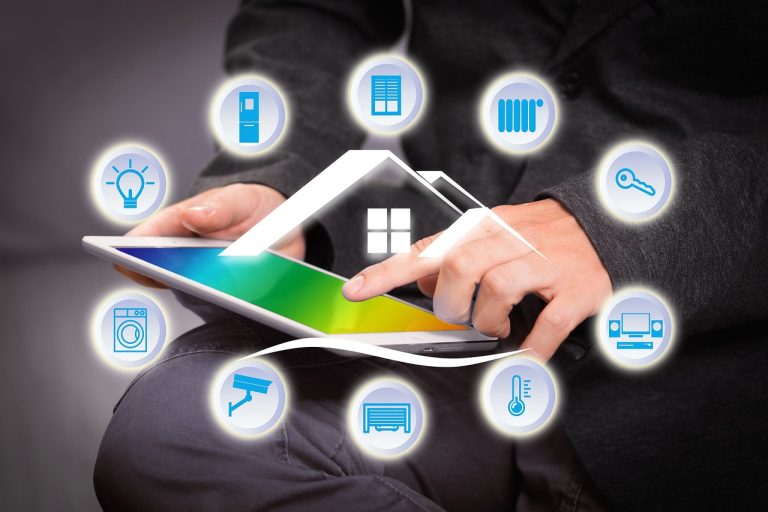
For years, the smart home was a frustrating mess of “cloud-dependent” devices. If your internet went down, your lights wouldn’t turn on. If a company went bust, your expensive hardware became a paperweight.
In 2026, the industry has finally shifted to Local Intelligence. Between the maturity of the Matter 1.5 protocoland the rise of AI-native hubs, the “brain” of your home now sits in your living room, not in a distant data center.
At SystemVerdict.com, we’ve tested the top systems to see which hub actually makes your home smarter—and which one just makes it more complicated.
1. The Matter 1.5 Revolution
If you haven’t heard of Matter, it is the “universal language” for smart devices.1 In 2026, version 1.5 has expanded to include almost everything: smart appliances, EV chargers, and even complex home security systems.
- The Benefit: You can buy an IKEA sensor, a Google lightbulb, and an Eve plug, and they will all work together seamlessly on one app.
- The Verdict: Don’t buy any smart device today unless it has the Matter logo on the box.
2. The Contenders: Local Brains vs. Cloud Giants
The “Power User” Choice: Home Assistant Green
Home Assistant has shed its “too technical” reputation.2 The Home Assistant Green hub is a plug-and-play box that runs your entire home 100% offline.
- Why it wins: It supports over 2,500 integrations. It doesn’t track your data, and it is the fastest system we’ve ever tested because it doesn’t wait for a cloud signal.
- The Verdict: The best choice for privacy-conscious users and tech enthusiasts.
The “AI Hub” Choice: Apple HomePod & Aqara W200
Apple has leaned heavily into Adaptive Intelligence. By using Ultra-Wideband (UWB) chips in your iPhone and HomePod, your home now “knows” where you are.3
- Why it wins: Your thermostat (like the new Aqara W200) adjusts the temperature based on which room you are actually in, and your doors unlock the moment you reach the handle—no phone-pulling required.4
- The Verdict: The most polished, “magical” experience for iPhone users.
The “Mass Market” Choice: Amazon Echo Hub (2026 Edition)
Amazon has moved away from simple voice commands toward “Proactive Dashboards.”
- Why it wins: Using Physical AI, the Echo Hub can now detect “anomalies”—like a faucet left running or a strange noise—and alert you before it becomes a disaster.
- The Verdict: Great for families who want a visual command center in the kitchen.
3. Comparison Table: 2026 Smart Home Systems
| Feature | Home Assistant Green | Apple Home (HomeKit) | Amazon Alexa+ |
| Data Privacy | 10/10 (Local Only) | 9/10 (Encrypted) | 6/10 (Cloud Heavy) |
| Ease of Use | 7/10 (Improving) | 10/10 (Seamless) | 9/10 (Very Easy) |
| Compatibility | Universal (Matter/Zigbee) | Matter & HomeKit only | Universal (Matter/Zigbee) |
| Core Strength | Customization & Privacy | User Experience | Proactive Automation |
4. How to Build a “Future-Proof” System
If you are starting from scratch in 2026, follow the System Verdict 3-Step Rule:
- Select your Protocol: Choose Thread over Wi-Fi whenever possible. It’s faster and uses less battery for sensors.
- Pick a Hub that is a “Matter Controller”: Ensure your hub can talk to other brands.
- Local over Cloud: Prioritize devices that offer “Local Control.” If the box says “Requires Internet to Function,” put it back.
The System Verdict
The Final Judgment
If you value privacy and never want your home to “break” during an internet outage, Home Assistant Green is the superior system.5 However, if you want the most intuitive, AI-driven home that anticipates your needs without you lifting a finger, the Apple Home ecosystem is the 2026 winner.
Verdict Score:
- Home Assistant: 9.5/10 (Stability)
- Apple Home: 9/10 (Innovation)